How To: Use Windows 10's Task Manager (Everything You Need to Know)
Task Manager got revamped quite a bit in modern versions of Windows. First introduced in Windows NT 4.0, it's become pretty popular among more advanced users. In Windows 10, Task Manager is not just a task manager anymore, it's also a system monitor, startup manager, history viewer, user controller, and the list goes on.Now, Task Manager is not the most glamorous aspect of Windows, but don't be fooled by this. Users both new and advanced can greatly benefit from the powers that Task Manger has. Let's jump into unleashing its and how it can benefit you.
Launching Task ManagerThere are many ways of launching Task Manager. Perhaps the fastest is by right-clicking on an empty space in the taskbar and selecting the "Task Manager" option from the context menu. Or you can opt for the keyboard shortcut of Ctrl + Shift + Esc. Or just start typing "task manager" in the Start menu. Or hit the infamous Ctrl + Alt + Del and choose the option from there.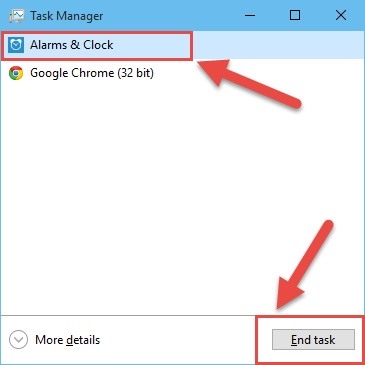
Task Manager Is a Task Manager!In case you missed it, the primary duty of Task Manager is as a task manager. Use it to end programs on your computer by clicking on the program you want to end and selecting "End task." Traditionally, quitting a program from Task Manager is done on apps that are frozen. Do keep in mind that forcing to stop a program from Task Manager might cause some data loss in that app, i.e., if you hadn't saved what you were typing, there is a good chance that your data will be lost.Bonus tip: If you double-click on an app's name, Task Manager will redirect you to that application.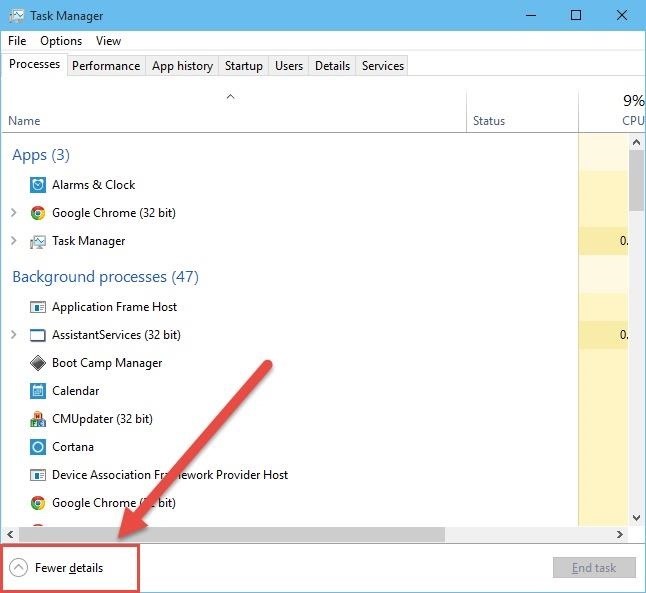
Digging into Task ManagerTo unleash Task Manager, simply click on the More details button to summon the advanced UI of Task Manager. To revert back to the simplified view, just click on the "Fewer details" button. You can still force-close programs from the advanced UI by the same process of selecting the program you want, then clicking on the "End task" button. However, in the advanced UI, you can also choose to stop Background processes, which as the name implies, are processes that are running in the background. You can also choose to stop Windows processes, which are processes that are run by the Windows operating system. You will notice a lot of processes running in the background and it will usually group similar processes under a parent process (click on the chevron to expand). Some of them are needed by the system, for example, any apps which you have live tiles for, the app process will be running in the background, even if you don't have the app open.Don't Miss: How to Remove Live Tiles & Resize the Start Menu in Windows 10 It's also generally a good idea to not go around and force-stop processes which you are not sure about. While most processes are usually protected in the sense that if Windows needs that process to run, it will bring that process back. In some other cases you might have to restart the system.Right-clicking on any process name brings up a useful context menu where you can view its location in the system, search online for it, view details about the process, and more. Rounding out the task manager portion of Task Manager, you will also see that you can sort processes by the Status (if the task is frozen), CPU, Memory, Disk, and Network usage. Also note that resource usage is color coded, where the darker the color, the more resources it uses. Sorting by these categories is usually a good way to see which process is being problematic. For example, you can choose to sort by Memory to see what is eating up your memory and slowing your system down.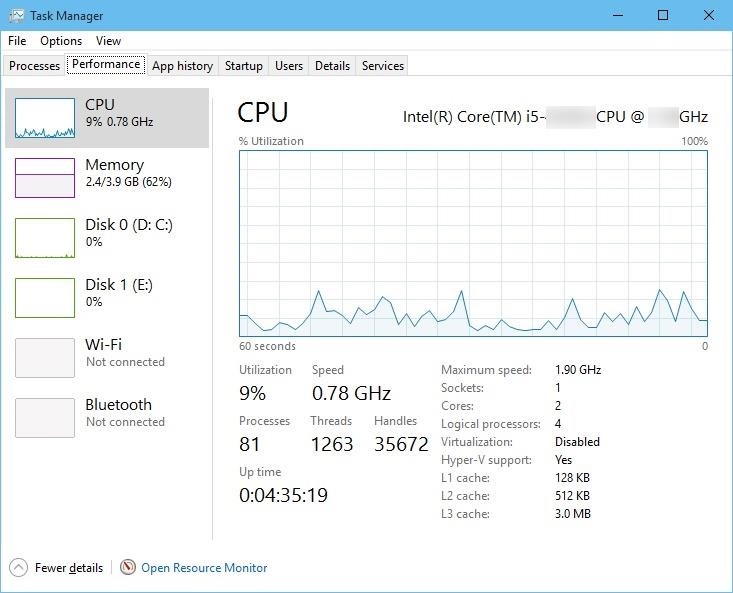
Performance MonitorClicking on the Performance tab will bring up the performance monitor. Here you can view colorful live graphs for CPU, Memory, Disk, and Network usage. You can also view other useful system information such as how long the computer has been on (Up time) or open Resource Monitor for even more data. Double-clicking on any of the graphs or on the sidebar will make Task Manager show only that graph or the sidebar respectively. Double-click on the graph or sidebar again to bring back regular Task Manager view.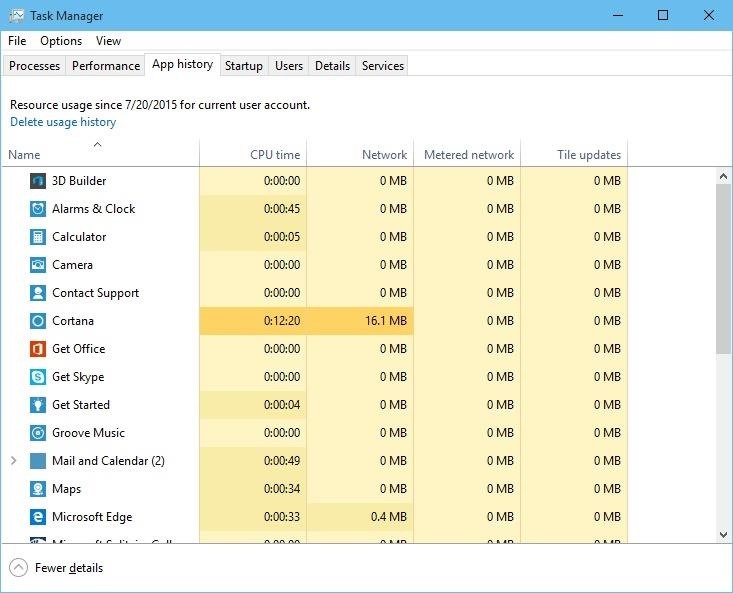
App HistoryThe next tab is a simple one. It merely shows you the historical resource usage for the Metro or Modern apps. As you can see, you also have the option to purge this data by clicking on Delete usage history.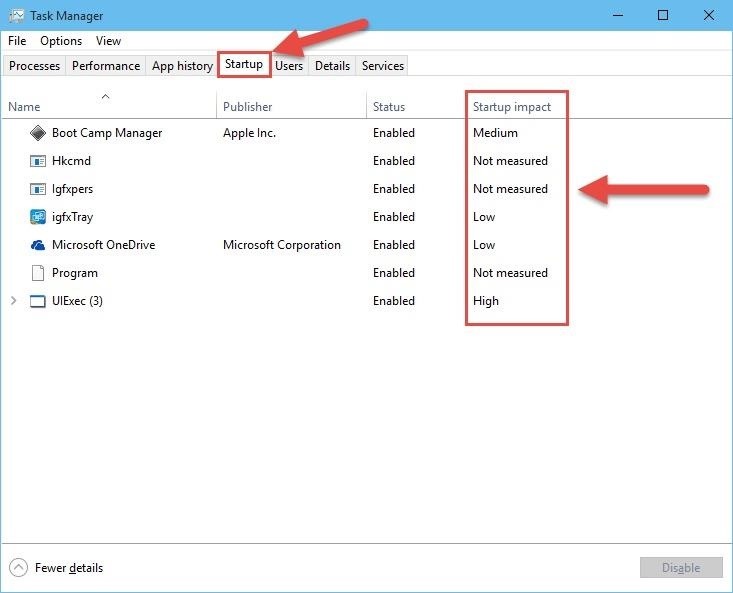
Startup ManagerThis next one is a highly useful feature. The Startup tab allows you to see what programs run at login automatically. Windows also measures the impact these programs have at boot and gives you a rating for them. It also gives you the option to prevent these programs from running at startup. To do so, just select the program, then click on Disable.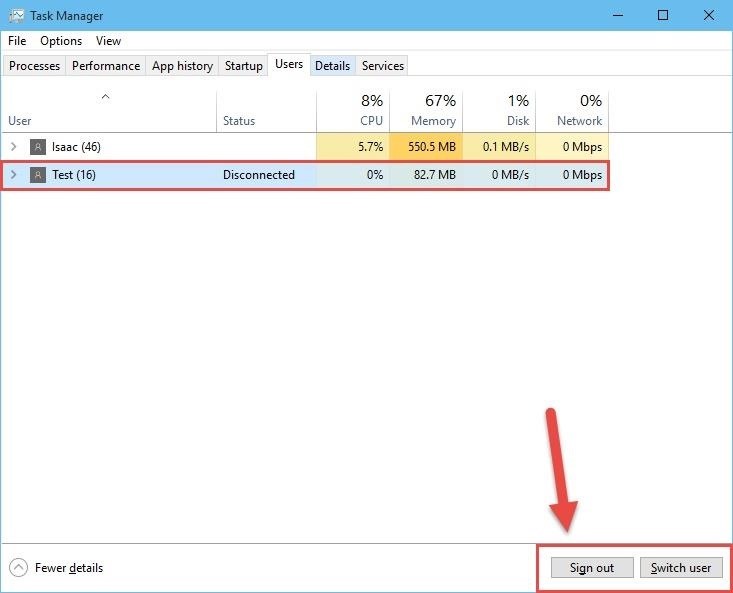
User MonitoringThe Users tab shows your account's system resource usage. If you have other users signed in, you can choose to switch to that account or sign them out.
Process DetailsThe Details tab shows more information about all the processes running on your system. You also have access to advanced options by right clicking on the process name.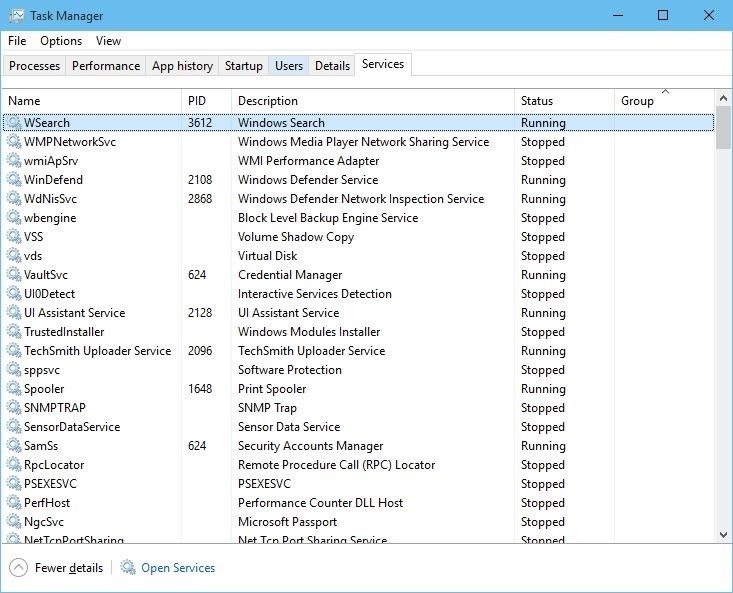
View ServicesServices are essentially system programs that run in the background. They don't have a User Interface and offer core system functionality, like printing, among many others.As you can see, the last tab is the Services tab. Here you can view the status of services on your computer. You can also choose to stop/restart services from the right click menu. Note that before delving into managing the services in Task Manager or the more robust Services application, please do your research. Generally the services that are running are fine, but if you want to "optimize" your system, look up the service names to see what you can do with them. You don't want to accidentally disable crucial services and then get a headache dealing with the fallout.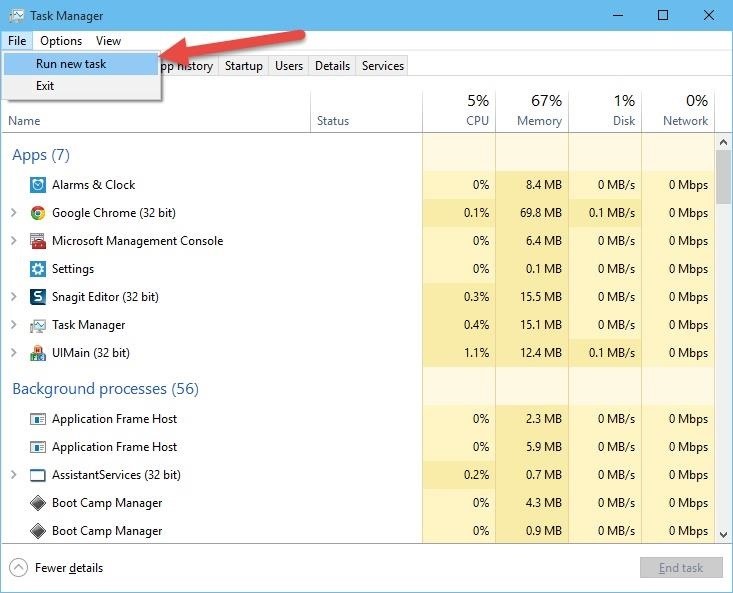
Run New TaskYou can create new tasks by selecting "Run new task" from the File menu. You can use this to manually conjure up new processes like with the Run command, and this can be very useful in certain scenarios. Task manager has definitely changed quite a bit, but users old and new will find it pretty useful. The option for a simple UI, a startup manager, and colorful live graphs displaying useful system information and more will be pleasing for those using Windows 10.For more tips on using Microsoft's latest OS, make sure to check out all of our Windows 10 tips and tricks. And follow Gadget Hacks over on Facebook, Google+, and Twitter for updates on Windows 10.
Cover image (explosion) via Shutterstock
Google Drive has a very simple way to switch from iOS to Android. iPhone users who want to take the plunge into the wonderful world of Android, but were hesitant to do so in the past because of the laborious process of backing up their data, can back up their contacts, photos, videos, and calendars
POCO LAUNCHER APK « Websites :: WonderHowTo
Adding shortcut to the Android Home screen: From the Home screen, tap Apps, then tap on the Widget page to find the SugarSync Shortcut. Once it's dragged to the Home screen, the Create Shortcut option will be shown. Browse for the folder where this shortcut should point to. Remove a shortcut on the Android Home screen: From the Android Home
2 Android Apps to Create Custom Homescreen Shortcuts
How To: Enable the Hidden Debug Options for Select Google Apps on Your Nexus 5 News: Christmas Is Coming Early! Android 7.1 Beta Is Hitting Nexus Devices This Month How To: Disable Double-Tap to Wake While Making Calls on Your Nexus 6 How To: Hide Your Nexus 7's Soft Keys to Maximize Usable Screen Space
How to Enable Developer Options on Your Nexus « Nexus 7
Arcade games have always been more about chance than skill (at least when I play them). Whether you're at a children's party at a Chuck E. Cheese's or drinking it up with your pals at a barcade like Dave & Buster's, you'll find similar games that hold the golden ticket to fun and cheap prizes that no one needs—boy, do you want them.
Make PSY Dance Whenever You Want with This DIY - WonderHowTo
The Ultimate Facebook Prank : How To "Kill" Your Friends on Facebook by Faking Their Deaths It only takes a minute for something well intentioned to turn into something sinister. Facebook created 'memorial pages' as way for friends and family to share their thoughts and feelings for those that are no longer with us.
How to Fake your death online « Practical Jokes & Pranks
The easiest way to change the system font of your iOS device is through an app called Bytafont 2. In this post we will show you how you can change the system-wide font of your iPhone, iPad or iPod touch. Follow the steps below to give a new look to your device. How to change font of your iPhone, iPad or iPod touch
How to change the font in the ipod touch'… - Apple Community
How To: Remove Any Status Bar Icon on Your Galaxy S8, S9, or Note 8 How To: Remove Any Status Bar Icon on Your Galaxy S10 — No Root Needed How To: Get Rid of the Annoying Input Notification & Keyboard Icon on Your Samsung Galaxy S4
How to Hide Icons in Android's Status Bar
Here are just a few little random tips that may help you while making balloon animals for fun and profit. This list is only a collection of random balloon tips and tricks that I've come up with on the fly tonight.
Great Books for The Balloon Artist and Entertainer « Make
This Video Will Show You How To Enter DFU Mode On Your iDevice. This Works On iPhone 4S, 4, 3gs, 3g, 2g and iPod touch 4th, 3rd, 2nd, 1st, gen or generation. Also Works For iPad 1 and 2. NEW
How to Put an Apple iPod Touch or iPhone into DFU mode
Android Alternatives for Instagram's New Collage-Making
Verizon, Motorola, and Google are launching Motorola Droid Friday November 6th. The phone boasts sleek design, the all-new Google Maps Navigation app, the latest Android 2.0 operating system, and
Among its many new features, Android P returns the spirit of lock screen widgets to users by presenting the current temperature and weather conditions underneath the clock. It isn't flashy, but it's a fun and useful addition that, unfortunately, does not always work. If your lock screen weather isn
Do people have the temperature on their Moto X4 lock and
Carrier-branded Galaxy S9 models come with a ton of bloatware that you usually can't get rid of without rooting. With a little digital elbow grease, however, there is a way to disable bloatware on your S9 or S9+, and it's a lot safer that attempting to root and modify you precious device.
The Safest Way to Disable ALL Bloatware on Your Galaxy S10
Popsugar; Fitness; Weight Loss; Before-and-After Weight Loss Using Lose It App I know that they also have a Premium version for $39.99/year that lets you set more specific goals (like body fat
The Best Weight Loss Apps You Need to Download to - Redbook


0 comments:
Post a Comment