Understanding OLED: The Difference Between LG's POLED & Samsung's AMOLED Screens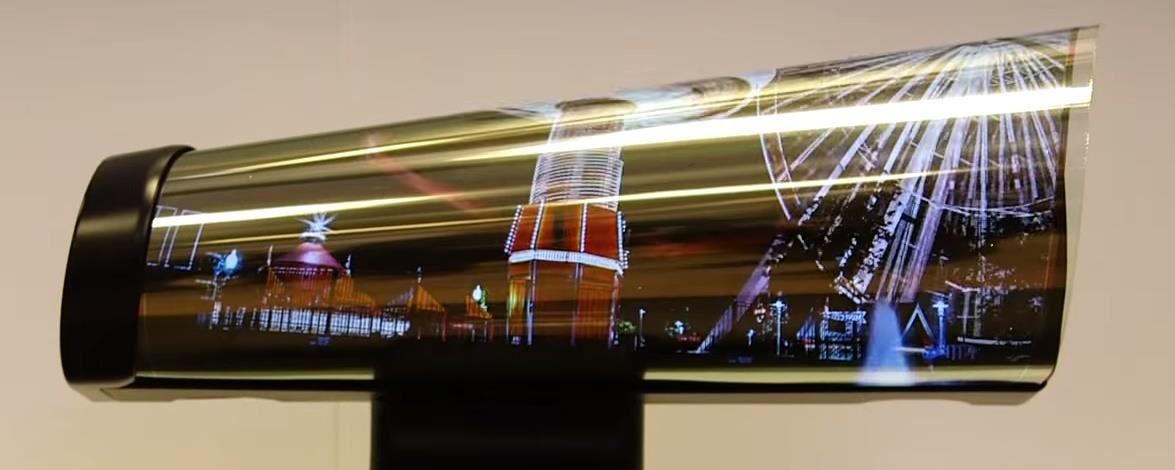
With the recent launch of the LG V30 and the Pixel 2 XL, LG has reintroduced the world to POLED. This display tech was showcased at CES 2015 and billed as a rival to Samsung's AMOLED displays, then promptly disappeared from the market for two years. But now that two of the biggest flagship phones this year are using the technology, many folks will be wondering what makes POLED different.First off, both of these display technologies are OLED, which means they provide vibrant colors and fantastic contrast. Several years ago, both Samsung and LG showed off flexible displays that could bend and roll up. According to a recent announcement by Samsung, we could be seeing this technology in mainstream devices next year.LG has been using OLED in their televisions for years, but their return to smartphone OLED panels is exciting. With more than one supplier for OLED screens, more pressure will be placed OEMs such as HTC and Essential to use a more modern technology in their devices' displays.Don't Miss: How to Tell if Your Phone Has an OLED or LCD Screen (& Why It Matters) LG's Flexible OLED display. Image by Engadget/YouTube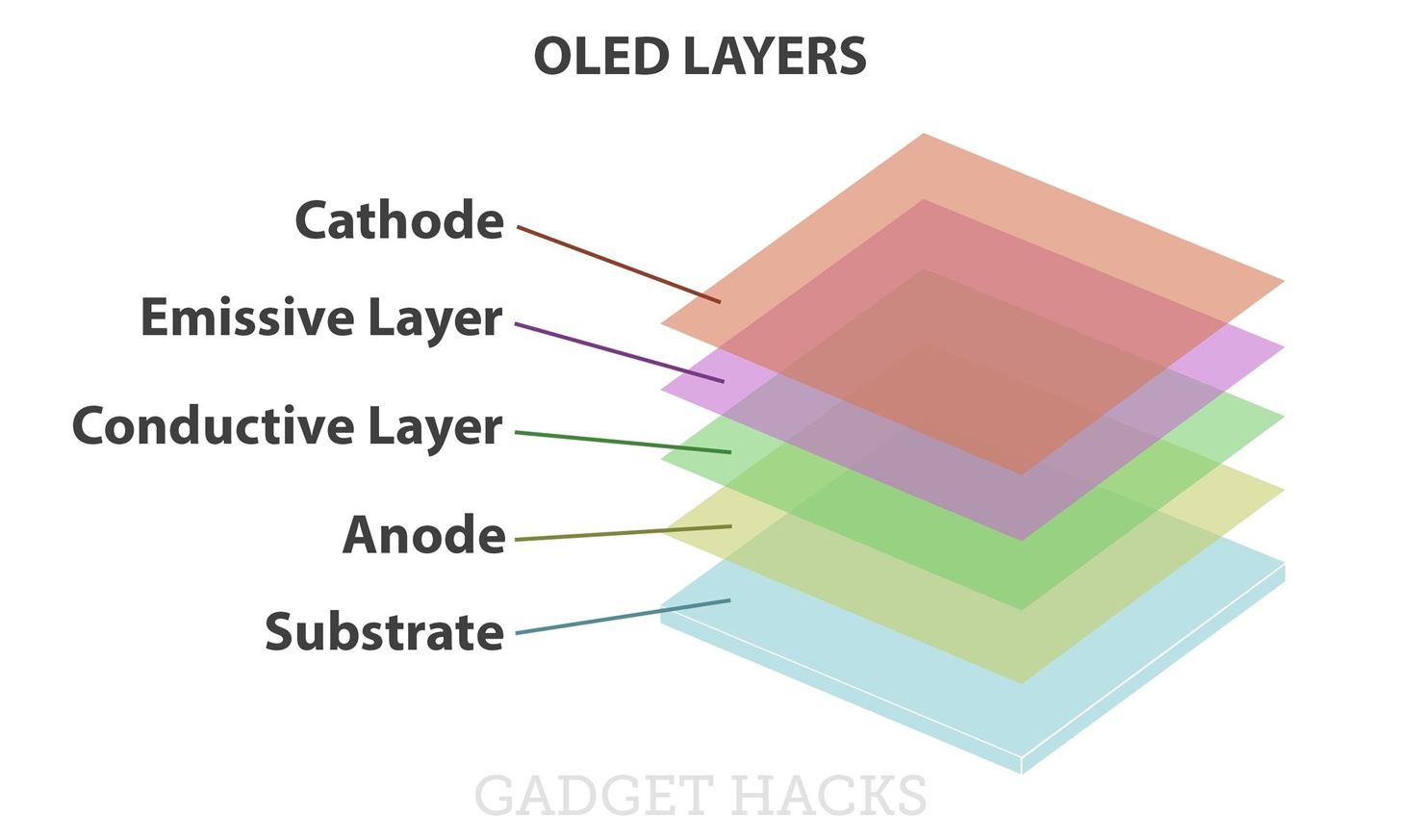
What Is OLED?OLED stands for organic light-emitting diode. An OLED screen is essentially comprised of millions of tiny LEDs (light-emitting diodes) that can produce light and colors individually. This is different than traditional LCD display technology, which uses a backlight to illuminate the entire display and a color filter to create the colors shown on your screen.The individual diodes in an OLED panel are also able to turn off completely, allowing for deeper blacks than LCD, which has to block out the backlight to create a black image. However, a portion of light escapes, which is why blacks typically look grey on LCD. Image by Dallas Thomas/Gadget Hacks Compared to LCD, OLED provides richer colors with superior contrast. Black images are better displayed due to the pixels' ability to turn off diodes, enabling an image that better reflects the original subject.OLED also provides better viewing angles, with the potential for unshifted colors even when viewing almost parallel to the display. OLED has a much faster response time (the duration of performing an input and the screen reacting to it) than LCD, which already can achieve 1 ms. The potential refresh rate (the rate at which a display updates) is also significantly higher than LCD, which has a current max of 240 Hz.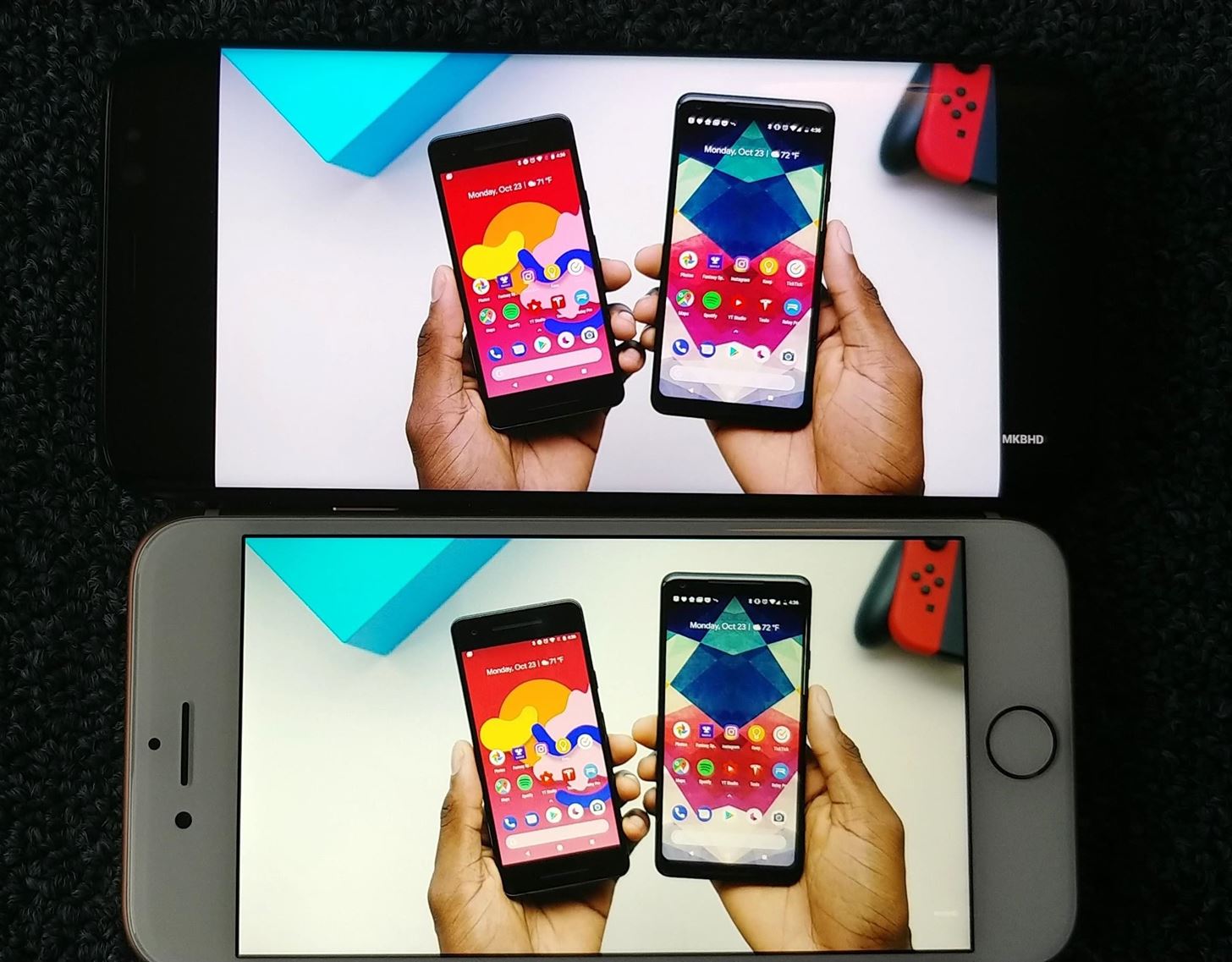
What's the Difference Between OLED & AMOLEDWhen Samsung introduced the world to AMOLED, the "AM" stood for Active Matrix, indicating the shift to more energy-efficient models needed for the mobile nature of smartphones. Currently, all OLED displays use Active Matrix, which, using a capacitor and a thin-film transistor (TFT), allows each pixel to operate individually at the right voltage.Previously, OLED used a passive wiring matrix, which provided current to rows of LEDs one at a time and used more electricity. Active Matrix is not only more efficient than passive wiring matrices, but in certain instances, even LCD. For example, when producing a primarily black image, OLED will consume significantly less power since its LEDs would be off, compared to LCD where the light would simply be blocked. AMOLED vs LCD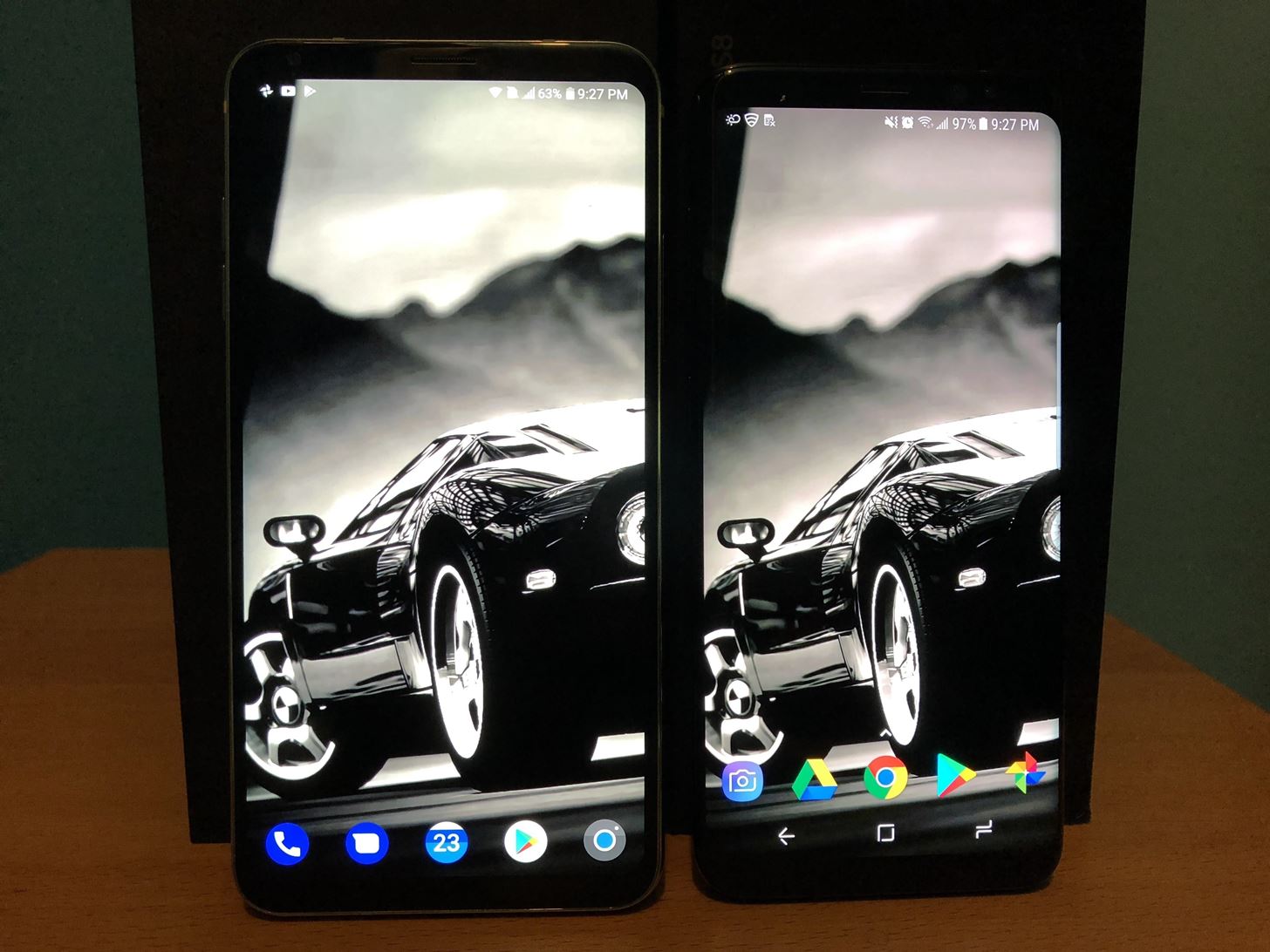
What the Difference Between POLED & AMOLED?When it comes to the true differences between AMOLED and POLED, the real answer is simply "marketing." Nonetheless, I'll explain in more detail, because that doesn't quite do the story justice.The "P" in POLED stands for "plastic," the material used for the back substrate where the thin-film transistors (TFT) and OLED are placed. Traditionally, glass is used for the back substrate due to its better optical properties. The problem with glass that it is a very rigid material, which presented manufacturers difficulties when trying to form new shapes.Don't Miss: How to Save Battery When Playing Music on Your OLED deviceWith consumers' demand for thinner bezels rising in recent years, manufacturers were forced look for new materials to create this substrate. Due to this demand, plastic was introduced as a replacement. Plastic substrates are much more flexible than glass, allowing for easier (and more cost efficient) modification to create new shapes such as rounded corners. Plastic substrates are also much thinner than glass substrates, and they provide better shock absorption.Currently, Samsung achieves the Infinity Display on the Galaxy S8 and S8+ using a plastic substrate and an active matrix panel, just like the LG V30. Then why doesn't LG just called their display AMOLED? P-OLED vs AMOLED While we can only speculate, LG probably wishes to differentiate themselves from Samsung, who has heavily marketed the AMOLED name. By calling it POLED, they garner attention from readers like you to learn what makes each display unique, and (like Samsung) can associate their devices with a display technology to help make marketing easier.But this doesn't mean both phones' displays will be identical. Similar to how LCD panels are not equivalent between different manufacturers, OLEDs using similar methods don't display image the same — so many more components are involved with the production of images on your smartphone's screen. LG and Samsung use different materials for the light emitting diodes and other components. They also arrange the pixels differently, which plays a bigger role in the differences between devices' displays.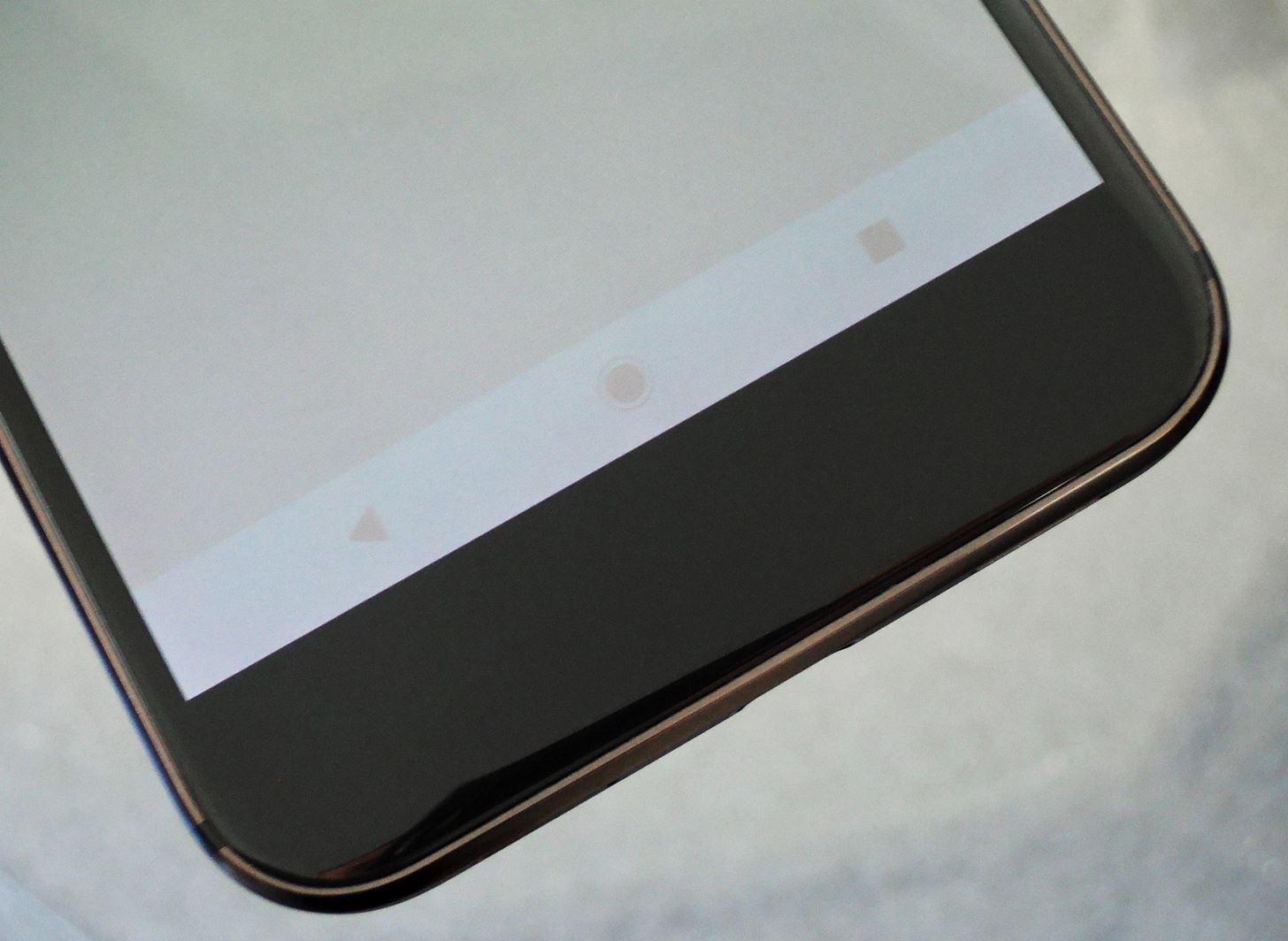
Screen Burn-InNow we can't discuss OLED without addressing the elephant in the room: Screen burn-in. At the time of this writing, Google's recently-released Pixel 2 XL has an issue with screen burn-in within a week of usage. Unfortunately, LG manufactured OLED screen have had this problem since the G Flex 2. Check the link below for extensive reporting on all the known issues of the POLED display in the LG V30 and Pixel 2 XL, including updates by Google or LG.Don't Miss: 5 Things We Learned from the Pixel 2 XL POLED Display Debacle Screen Burn-in on Pixel XL. Image by Dallas Thomas/Gadget Hacks Screen burn-in is an issue with both AMOLED and P-OLED. Individual LEDs decay during normal usage, and since LEDs operate independently, they decay at different rates. However, you can take measures to fix already burnt-in screens and reduce their occurrence in general. The link below discusses potential fixes and preventative measures for the Galaxy S8's AMOLED screen, but the methods are applicable to any OLED screen.Don't Miss: How to Fix OLED Screen Burn-in & Prevent it From Happening AgainOverall, POLED and AMOLED have more similarities than differences. The best part is that as consumers, we win. With LG now becoming a big player in the OLED space for smartphones, other manufacturers will have more incentive to include either company's OLED display in their next flagship phone — we've already seen this shift with the introduction of the iPhone X. Which display do you prefer? Let us know in the comments below.Follow Gadget Hacks on Facebook, Twitter, Google+, YouTube, and Instagram Follow WonderHowTo on Facebook, Twitter, Pinterest, and Google+
Cover image and screenshots by Jon Knight/Gadget Hacks
Your iPhone's Lock Screen Is Getting Better Widgets
To do this, IFTTT has functions that can grab files from a cloud storage service and push them to another. Enterprising IFTTT users have already created recipes that use IFTTT to push files from one cloud storage service to another, and they can be found with a quick search on the IFTTT site.
How to Transfer Files From Android to Your PC | Digital Trends
Download and Install Facebook Lite on your iPhone: iPhone is known for its security and durability. When it comes to this feature iPhone takes care of various feature to save it from the various third-party application.
Download & install Facebook Lite on iPhone [iOS 9 & Above
While it is possible to get silent mode by using Interruptions in 'Priority' mode, the whole process is time consuming and cumbersome at best. Thankfully, quite a few methods exist to bring back silent mode in Android 5.0 Lollipop, which are pretty straightforward and hardly take any time.
[Xposed] True Silent Mode for Lollipop v2.9 | Xposed General
How to Disable Notification Previews for All Apps on iPhone and iPad in iOS 11 Posted by Khamosh Pathak on Sep 18, 2017 in How To , iOS 11 , Notification Center , Top Stories It's a bit ironic that we'll do everything to make sure our phone is as secure as possible, but leave out our Lock screen notifications for everyone to see.
How to Disable Lock Screen Notifications and Previews in iOS
This tutorial will show you how to jailbreak your iPhone 3GS using PwnageTool for Mac. PwnageTool now supports the latest 3.1.3 firmware. Step One Make a folder called "Pwnage" on the desktop. In
Jailbreak iOS 4 iPhone with Pwnage Tool - YouTube
Apple has released iOS 4.0.2 to patch the PDF exploit, JailbreakMe which was previously used to jailbreak iOS 4.0.1 on iPhone 4, 3GS, 3G, iPod touch 3G / 2G and iPad is now incompatible with iOS 4
Unlock & Jailbreak iphone 3g & ipod touch 2nd generation
The Galaxy S8 Once Had a Home Button & It Looked Terrible
How To Change The Zelotes 5500 DPI Gaming Mouse Colors From Cycling To One Solid Color! 7 Things That Can Change Your Eye Color 2015 Zelotes 5500 DPI 7 Button LED Optical USB Wired Gaming
Why are optical mouse LEDs red? - Super User
How To: Protect a touchscreen device against rain (cheaply) How To: Make magic waterproof sand How To: Install a dryer in your home How To: Start a great fire in a wood stove How To: Build a very inexpensvie grow light system
How to Transform Multiple Screens into One Big Virtual
Instead of all that juggling, when you plug your phone into your Windows PC, you'll be able to control every aspect of Android's UI with a dedicated window that mirrors your phone's display. It even accepts mouse and keyboard input, so now, your phone and computer will be more integrated than ever.
5 Best Methods To Mirror Android Screen to Your PC (No Root
InformationHow To: Jailbreak iOS 9 on Your iPad, iPhone, or iPod Touch monitor child iphone view controller. How To: Jailbreak iOS 9 on Your iPad, iPhone, or iPod Touch3.0.12.9 monitor child iphone view controller out of 5
Owner Every Sneaky 18 Must Iphone Settings Privacy Know
chtmotorsport.com/zbvtb/8/Owner-Every-Sneaky-18-Must-Iphone-Settings-Privacy-Know-betraying-xwYn7qFa/
The Machines. The Machines (): The darling of Apple's iPhone launch event, The Machines is a marvel of AR and mobile gaming. Players place towers and command troops on an intricately designed 3D battleground to defend their territory and attack the base of their AI or human opponent.
Privacy Iphone Owner Settings betraying Every Sneaky 18 Must


0 comments:
Post a Comment