News: The Xperia 10 & 10 Plus Sony's Widescreen Media Powerhouses Are Less Than $500
In 2019, Sony is mixing up its design, attempting to stand out among the sea of familiarity. Instead of emulating Samsung with punch hole cameras, they decided to target a rare section of the market, content consumers. There's the Xperia 1 for those who want the best, and the Xperia 10 and 10 Plus for the budget crowd.It seems like Sony saw our list of the best budget phones for streaming and are trying to return to the number one position. Instead of the usual 18:9 or 19.5:9 aspect ratio, Sony opted for a 21:9 screen. At this ratio, the phone is much longer than its competitors. But it is also perfect for those who enjoy watching movies, as this is a common the aspect ratio used in films. What does that mean exactly? Well, now you can watch movies in widescreen without any cropping or vertical black bars, making for a better experience.Jump to a section: Standout Features | Dates | Storage | Price | Body | Basics | Software | Skin | Display | Performance | Battery | Front Camera | Rear Camera | Audio | Media Formats | Sensors | Connectivity | Security | Box Includes | Accessories
Standout FeaturesThe Xperia 10 and 10 Plus are the spiritual successors to the Xperia XA2 and XA2 Ultra. In fact, they might even retake the top spot on our comparison of the best midrange phones for streaming media. Not only did both phones keep the price the same (or even lower) than their predecessors, they manage to stand out with a 21:9 aspect ratio and aluminum design. And in a world where headphone jacks are rare, both phones have them for quality audio performance while watching your favorite movie.
Important DatesThe Sony Xperia 10 and 10 Plus were announced alongside the Xperia 1 on February 24, 2019. While no North American release date was given, they were released on March 18 in the US. Pre-orders became available on Feb. 28, just a few days after the announcement. It's currently sold unlocked from Amazon and Best Buy.Release date: March 18, 2019 Preorder date: Feb. 28, 2019 Announced: Feb. 24, 2019Buy the Xperia 10: Amazon | B&H | Best BuyBuy the Xperia 10 Plus: Amazon | B&H | Best Buy
Storage CapacityBoth phones come with 64 GB of internal storage. Both support microSDXC memory cards for additional storage up to 2 TB.Storage available: 64 GB Expandable storage: yes, microSDXC (up to 2 TB)
Price for EverythingThe Xperia 10 is priced at $349.99, while its larger sibling is $429.99. This pricing is impressive, especially since their predecessors retailed at $349.99 and $449.99, respectively.Price: $349.99 (Xperia 10), $429.99 (Xperia 10 Plus)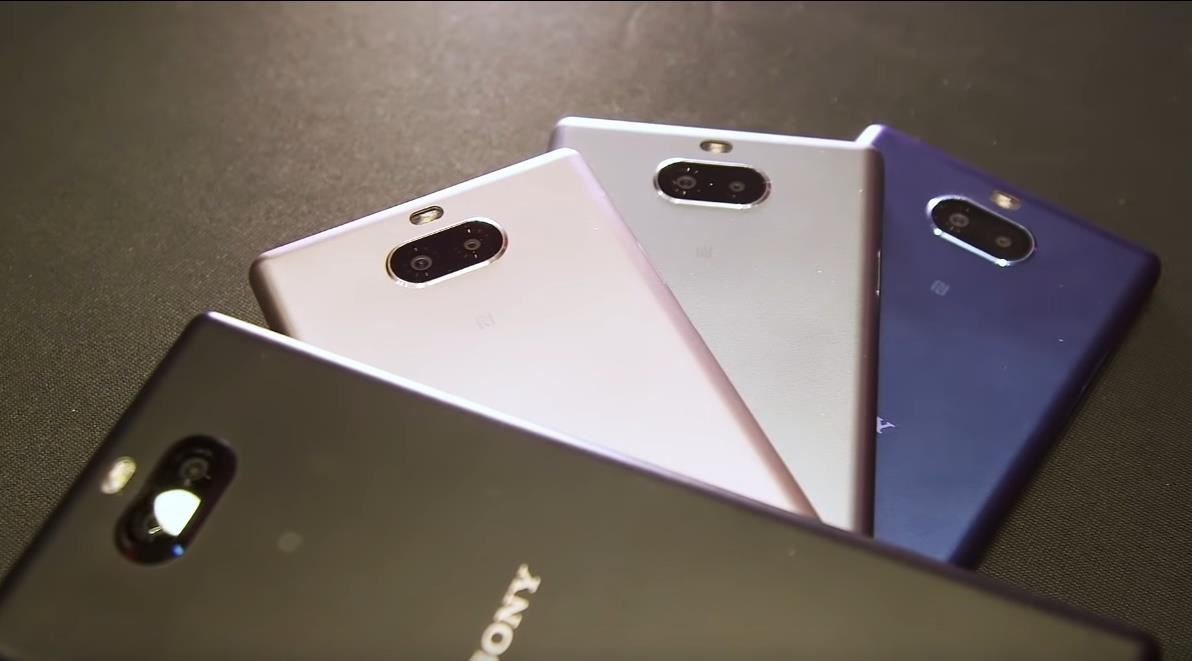
BodyThe body and sides use an aluminum chassis. The display is protected by Gorilla Glass 5, a material which can survive 1.6-meter, shoulder-height drops onto hard, rough surfaces up to 80% of the time. For US customers, the Xperia 10 and 10 Plus will come in two colors, black and silver.Frame: aluminum Glass Protection: Gorilla Glass 5 Finish: black and silver While they come in a variety of colors, in the US, it will only come in silver and black. Image by Engadget/YouTube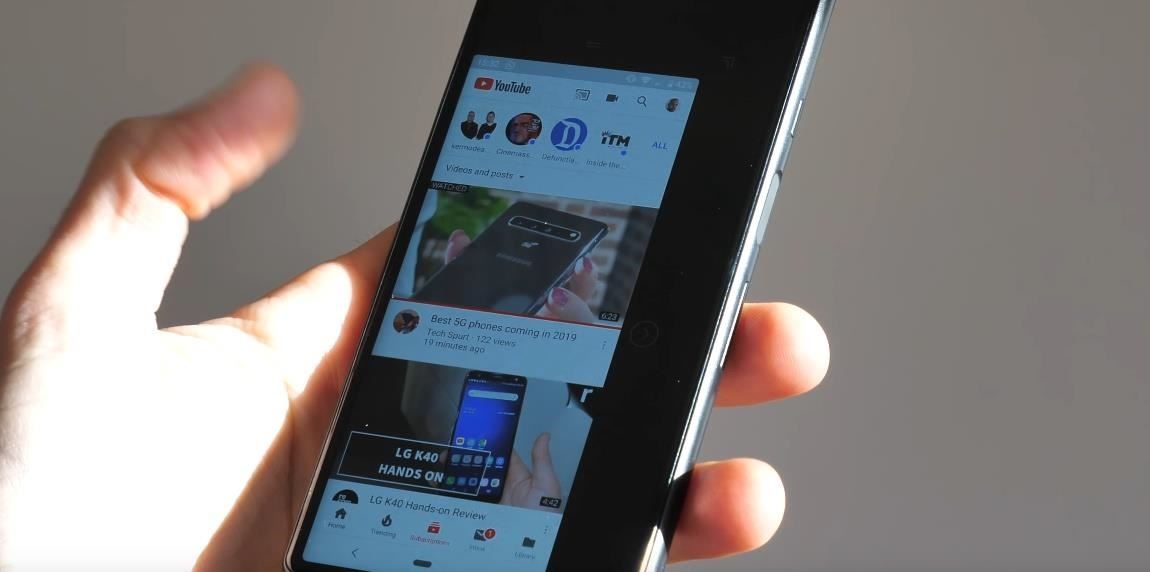
BasicsBecause of the 21:9 aspect ratio, both the Xperia 10 and Xperia 10 Plus are pretty tall phones. Despite having a 0.4-inch smaller display, the Xperia 10 is about the same height as the OnePlus 6. The Xperia 10 Plus is one of the tallest smartphones on the market, with a height higher than Samsung's Galaxy S10+ and Apple's iPhone XS Max.Height: 6.13 inches (Xperia 10), 6.57 inches (Xperia 10 Plus) Width: 2.68 inches (Xperia 10), 2.87 inches (Xperia 10 Plus) Depth: 0.33 inches (Xperia 10), 0.33 inches (Xperia 10 Plus) Weight: 5.71 ounces (Xperia 10), 6.35 ounces (Xperia 10 Plus) Dust/water resistance: no rating Supported carriers: Verizon, AT&T, T-Mobile Infrared blaster: no While the screen is tall, one-handed mode makes things easier. Image by Tech Spurt/YouTube
SoftwareThe Xperia 10 and 10 Plus will run the latest version of Android, 9 Pie. With this version, users are better protected against malware apps trying to use the camera or microphone in the background. Android 9 Pie also brings new changes to Do Not Disturb to protect your digital wellbeing, such as being able to prevent new notifications from waking the screen or even creating a notification dot. In all, there are over 40 changes that come with the new version of Android.Version: Android Pie 9.0
SkinBoth phones are running the latest version of Xperia UI on top of Android 9 Pie. The big changes include a launcher designed to take advantage of the new aspect ratio, including an extra row in the app drawer.Both phones are apart of Sony's Open Devices program which means developers can build and flash their own version of Android Pie on top these devices. This includes AOSP (or stock Android), allowing users to enjoy a clean version of Android minus the changes of Xperia UI.Version: Xperia UI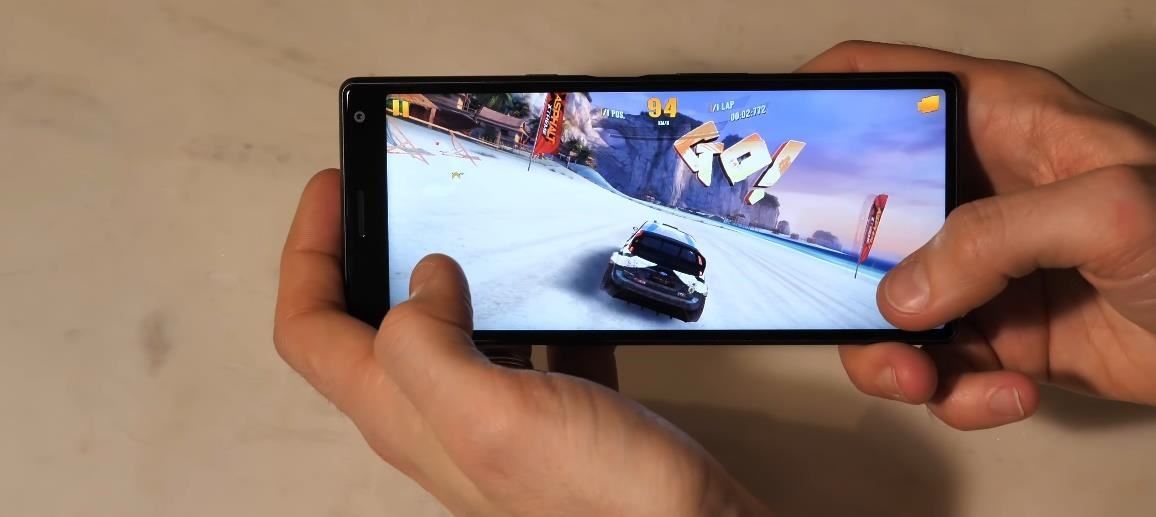
DisplayBoth phones are equipped with large IPS LCD panels sporting a 2520 x 1080 resolution. The Xperia 10 uses a 6-inch display while the Xperia 10 Plus uses a 6.5-inch screen. There is no display notch or punch hole, instead, the camera is housed in the top bezel. The display has an aspect ratio of 21:9, the native resolution of most films. This ratio allows for videos to show in widescreen without black bars.Screen size: 6.0 inches (Xperia 10), 6.5 inches (Xperia 10 Plus) Screen resolution: 2520 x 1080 pixels Total pixels: 2,721,600 pixels Pixel density: 457 ppi (Xperia 10), 422 ppi (Xperia 10 Plus) Screen type: IPS LCD Notch: no Punch Hole: no Screen-to-body ratio: 79.4 percent (Xperia 10), 81.0 percent (Xperia 10) Aspect ratio: 21:9 Minimum brightness: Unknown Maximum brightness:Unknown Refresh rate: 60 Hz (60 Hz for touch-sensing) Color temp: Unknown Color gamut: Unknown Widescreen gaming. Image by Recombu/YouTube
PerformanceIn regards to performance, both smartphones use one of Qualcomm's Snapdragon 600 series processors. The Xperia 10 uses the Snapdragon 630, while the Xperia 10 Plus uses the Snapdragon 636.The main differences between these two SoCs are the cores, with the latter using custom cores from Qualcomm and the former using ARM Cortex. This is what allows for a lower clock speed on the Snapdragon 636 while maintaining faster performance.Memory: 3 GB RAM (Xperia 10), 4 GB RAM (Xperia 10 Plus) Processor: Qualcomm Snapdragon 630 (Xperia 10), Qualcomm Snapdragon 636 (Xperia 10 Plus) Chip size: 14 nanometer CPU frequency: 2.2 GHz (Xperia 10), 1.8 GHz (Xperia 10 Plus) CPU cores: 8 cores GPU: Adreno 508 (Xperia 10), Adreno 509 (Xperia 10 Plus) GPU cores: Unknown
BatteryBoth phones come with a modest battery capacity of 2,870 and 3,000 mAh, respectively. Both the Xperia 10 and 10 Plus support USB Power Delivery and Quick Charge 3.0, with QC 3.0 supporting up to an 18W charge. Due to its aluminum back cover, Qi wireless charging isn't possible.Battery: rechargeable lithium-ion Capacity: 2,870 mAh (Xperia 10), 3,000 mAh (Xperia 10 Plus) Wired charging: yes, Quick Charge 3.0 (18W), USB Power Delivery Wireless charging: no
Front CameraIt appears Sony placed the same front-facing camera in both phones. Both phones are using an 8 MP, Æ’/2.0 camera stabilized with Sony SteadyShot.Resolution: 8 MP Aperture: Æ’/2.0 Zoom: no Flash: yes, screen flash Image stabilization: yes, digital RAW support: Unknown Object detection: Unknown Portrait Mode: yes Formats: Unknown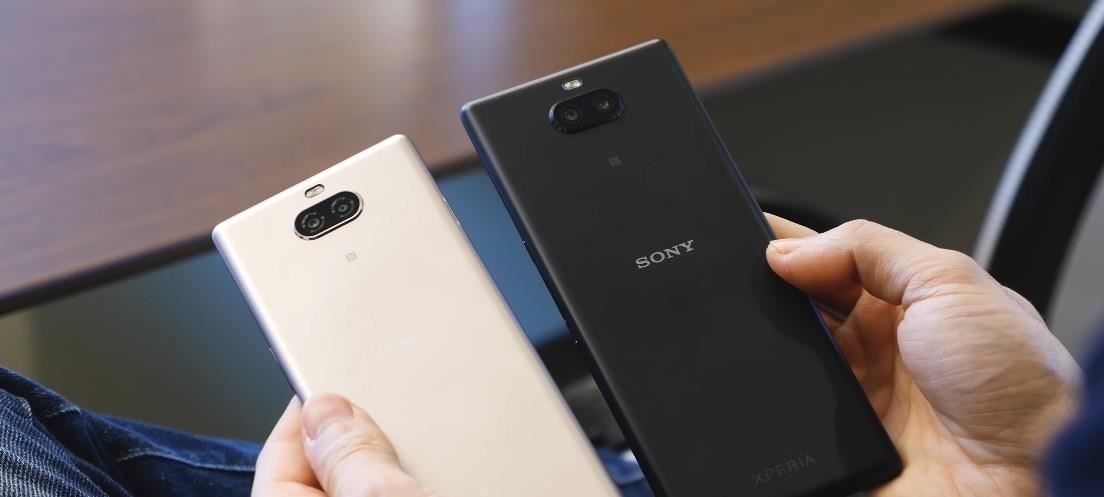
Rear CameraAnother difference between the two devices is the rear cameras. While both are equipped with a dual lens, the Xperia 10 Plus rocks a lower resolution main shooter but a higher resolution second lens. Both phones' main lens is a wide-angle lens. However, the 5 MP sensor on the Xperia 10 is covered by an even wider lens at 87.9°, while the Xperia 10 Plus is a telephoto lens with 2x optical zoom.Resolution: 13 MP + 5 MP (Xperia 10), 12 MP + 8 MP (Xperia 10 Plus) Pixel size: 1.12 µm + 1.4 µm (Xperia 10), 1.25 µm + 1.12 µm (Xperia 10 Plus) Sensor size: 1/3" + 1/4" (Xperia 10), 1/2.8" + 1/4" (Xperia 10 Plus) Aperture: ƒ/2.0 + ƒ/2.4 (Xperia 10), ƒ/1.75 + ƒ/2.4 (Xperia 10 Plus) Zoom: yes, 5x digital (Xperia 10), 2x optical + 5x digitial (Xperial 10 Plus) Flash: yes, LED Image stabilization: yes, digitial RAW support: no Lens cover: Unknown Object detection: Unknown Formats: Unknown Both devices are limited to 4K at 30fps. However, both support 120 fps slow-motion recording at 1080p. Sony's SteadyShot provides stabilization for smooth videos.Resolution: 720p, 1080p, and 4K Max frame rate: 30 fps for 720p, 60 fps for 1080p and 30 fps for 4K Slow motion: yes, 1080p at 120 fps Time-lapse: Unknown Photos: Unknown Zoom: Unknown Flash access: Unknown Image stabilization: yes, digital Object detection: Unknown Autofocus: Unknown Audio: stereo Formats: Unknown Image by PhoneArena/YouTube
AudioUnlike the Xperia 1, the Xperia 10 and 10 Plus include a 3.5 mm headphone jack. Both devices support Hi-Fi audio codecs thanks to Android 9 Pie, including Sony's LDAC. There is also an FM radio for those looking to listen on the go.3.5 mm headphone jack: yes Stereo speakers: no Mics: Unknown Max speaker volume: Unknown
Media FormatsThe Xperia 10 and 10 Plus support all the file types already supported by Android, including VP9, the open-source standard published by Google.Audio: AAC (AAC-LC, AAC+, eAAC+, AAC-ELD), ALAC, AMR-NB, AMR-WB, DSD, FLAC, MIDI, MP3, PCM, Opus, Vorbis Video: MPEG-4 Video, H.263, H.264, H.265, VP8, VP9
SensorsBoth phones support the usual sensors.Accelerometer: yes Ambient light: yes Barometer: no Color temperature: no Compass: yes Gravity: no Gyroscope: yes Hall: yes Infrared: no Laser: no Pedometer: yes Proximity: yes In the North American variant, the only geolocation sensors included are GPS and aGPS (North America) and Glonass (Russia's version of GPS).GPS: yes aGPS: yes Glonass: yes BeiDou: no Galileo: no QZSS: no
ConnectivityThe Xperia 10 and 10 Plus come with the usual connectivity sensors, including Wi-Fi 5 (802.11ac) and Bluetooth 5. There is NFC support, allowing the phone to be used with Google Pay.Wi-Fi: 802.11 a/b/g/n/ac Bluetooth: 5.0 NFC: yes Cellular: nano-SIM Port: USB Type-C, USB 2.0 Other: FM Radio Both the Xperia 10 and 10 Plus are GSM unlocked, making them compatible with T-Mobile and AT&T network. Additionally, it is certified by Verizon, making it compatible on its network as well, as an LTE-only device.GSM GPRS/EDGE (2G) Bands 850/900/1800/1900 UMTS HSPA+ (3G) Bands 1, 2, 4, 5, 8 LTE (4G) 1/2/3/4/5/7/8/12/13/17/25/28/29/66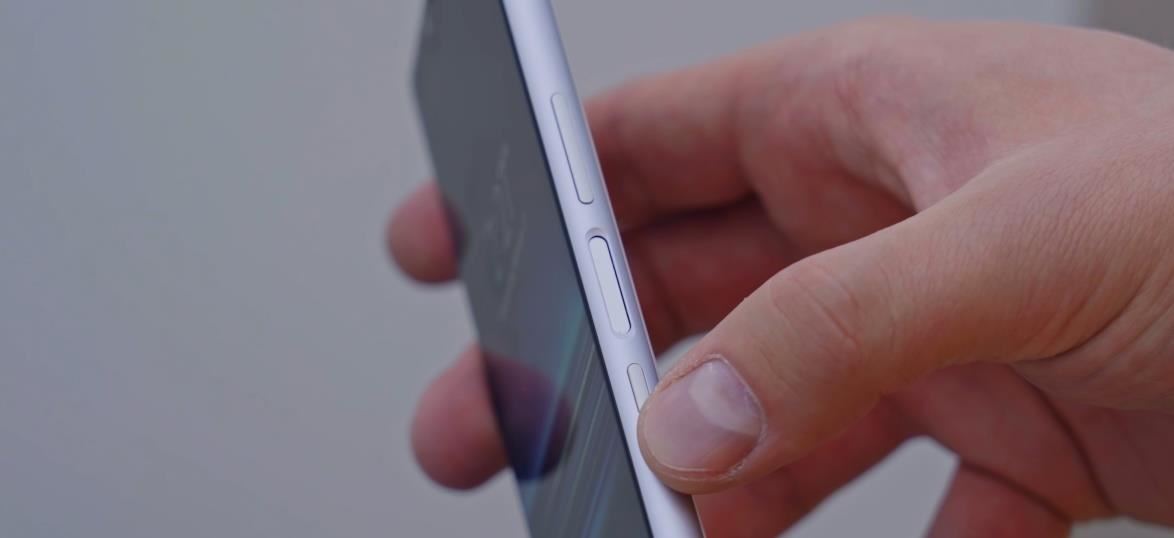
SecurityThe Xperia 10 and 10 Plus are equipped with a side-mounted fingerprint scanner.Fingerprint scanner: yes, side-mounted Face scanner: no Iris scanner: no Manual authentication: password, PIN, pattern, swipe Image by Rozetked/YouTube
Box IncludesWe currently don't know what's included in the box, but we'll update this page when we find out.Compare the Sony Xperia 10 & 10 Plus to Other PhonesFollow Gadget Hacks on Pinterest, Twitter, YouTube, and Flipboard Sign up for Gadget Hacks' daily newsletter or weekly Android and iOS updates Follow WonderHowTo on Facebook, Twitter, Pinterest, and Flipboard
Cover image by Rozetked/YouTube
Pandora is an internet radio service that picks music for you based on your favorite songs and bands. With Pandora it's easy to create a never-ending playlist of songs to fit a certain mood, get recommendations for music you might like, and share your stations with friends. Best of all, Pandora is free to use on your computer and phone.
How to Add and share music with friends on Pandora Radio
Check your firewall setup to see if these ports have been added for some specific purpose. If you don't see anything in your firewall rules list regarding these ports, it could indicate that you have malware running on your computer and it's possible that your PC may have become part of a botnet .
How to Enable Your Wireless Router's Built-in Firewall
If this nightmarish situation strikes fear into your heart, you'll definitely want to consider making a full system image backup of your brand new Windows 10 installation. Unlike the automated restore point feature, a system image is an exact snapshot of your entire Windows installation, including app settings and data.
2 Easy Ways to Create Windows 10 System Image
Firefox supports multiple Home tabs, which is how you can open multiple web pages each time you open Firefox. To set up the URLs for your Home tabs, first open the web pages you want on separate tabs.
Search across multiple open tabs on Firefox and Chrome
Although these days it really is easy to build your own development boards with USB interface, it is much easier just to buy this sort of boards ready made, with integrated drivers. This article is not going to tackle microcontroller development boards, instead take steps to introduce the ATtiny85 USB Mini Development Board from Digispark ™!
The Best Kit To Learn To Program Microcontrollers
allaboutee.com/2011/07/08/the-best-getting-started-with-microcontrollers-kit-there-is/
The winner of all kits I own and have used is the PICDEM Lab Development Kit by Microchip. I have to say that prior to using this kit I had been programming chips for about 2 months so I wasn't completely new to this, but I still wish I had started with it, it would have made stuff so much easier.
Recommendations for a development board for - Stack Overflow
That would be a personal decision, based on what you would consider to be a 'light overclock'. You've got some decent parts there, they should overclock well. What you need to be asking yourself is "I read the overclocking guide and want some clarification about _____, maybe the forums can help me."
How to overclock your monitor to a higher refresh rate | PC Gamer
While we're waiting for Google to sort out the mess over suspended Google+ accounts, it's a good reminder that you have the option to download much of your Google+ data with Google Takeout.
5 Ways to Keep Google from Collecting Data on Your Android
I drive for both Lyft and UberX, often at the same time to increase my chances of earning. (Uber X is the same as Lyft--a person with a car--not to be confused with the black car service they do, too.)
Busiest Time of the Year for Uber Drivers: October-December
You can add a private label to places on your map. Labeled places show up on your map, in search suggestions, and in the "Your places" screen. To add a label, follow the steps below. Open the Google Maps app . Search for an address. Or drop a pin by tapping and holding a place on the map. At the bottom, tap the name of the place. Tap Label. Notes:
remove labels from google maps label your favorite places
If you're scratching your head trying to figure out which smartphone is best for you, then come on in and we'll show you how to choose a cell phone. Dive into our comprehensive guide on how to
How to Choose a Cell Phone: 14 Steps (with Pictures) - wikiHow
How to Liven Up Your Samsung Galaxy S3's Home Screen with
Install Safestrap Recovery & Custom ROMs on Your Bootloader-Locked Samsung Galaxy S4 [How-To]
How to Flash a Custom Recovery on the Samsung Galaxy Note 3
Snapchat 101: How to Share Custom Lenses & Filters with


0 comments:
Post a Comment